
What makes a good student? Of course. This is an excellent and fundamental question. While the image of a “good student” often conjures up straight-A’s, the reality is far more nuanced and rewarding. A good student is not just a passive receiver of information but an active and engaged learner. Their qualities span attitudes, habits, and character traits. Here’s a breakdown of what truly makes a good student, categorized for clarity.

Mindset and Attitude (The Foundation)
This is the most critical category. Without the right mindset, the rest is much harder to achieve.
- Intrinsic Motivation: They are driven by a genuine desire to learn and understand, not just by grades or external rewards. They find the subject interesting or see its value in the bigger picture of their life and goals.
- They see learning as an ongoing adventure, not a chore.
- Resilience & Growth Mindset: They understand that failure and struggle are not endpoints but essential parts of learning. They view challenges as opportunities to grow smarter and don’t let a bad grade define them.
- Self-Awareness: They know their own strengths and weaknesses. They understand how they learn best (their learning style) and what environments help them focus.
Habits and Strategies (The Practical Toolkit)
This is how the right mindset is put into action.
- Effective Time Management: They prioritize tasks, avoid procrastination, and break large projects into manageable chunks. They use planners, calendars, or apps to stay organized.
- Active Participation: They contribute to class discussions, ask questions when confused, and engage with the material and their peers. This deepens understanding for themselves and everyone else.
- Strong Study Skills: They don’t just passively re-read notes. They use active recall (testing themselves), spaced repetition (reviewing material over time), and other evidence-based techniques to move information from short-term to long-term memory.
- Note-Taking Prowess: They have developed a system (like Cornell or Outline method) that works for them to capture key ideas, not just transcribe lectures verbatim. Their notes are a tool for later review.
- Consistency: They understand that learning is a marathon, not a sprint. They keep up with readings and assignments regularly rather than cramming at the last minute.
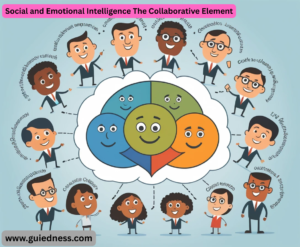
Social and Emotional Intelligence The Collaborative Element
Learning is often a social process, and good students navigate this skillfully.
- Respect: They respect their teachers, peers, and the learning environment. They listen to others’ opinions, even if they disagree.
- Communication: They can articulate their ideas clearly and ask for help when they need it. They are not afraid to email a teacher, visit during office hours, or form a study group.
- Collaboration: They work well with others in group projects, contributing fairly and valuing the team’s success over individual glory.
- Balance: They understand that well-roundedness is key to avoiding burnout. They make time for hobbies, friends, family, and self-care, recognizing that a healthy mind and body are essential for effective learning.
Intellectual Character (The Higher-Level Thinking)
Beyond just absorbing facts, good students develop sophisticated ways of thinking.
- Critical Thinking: They don’t accept information at face value. and “What is the counter-argument?”
- Creativity: They can make novel connections between ideas, think outside the box to solve problems, and express their understanding in unique ways.
- Accountability: They take ownership of their education. They don’t make excuses or blame others for their setbacks. They see their education as their own responsibility.
Important Misconceptions to Avoid:
- Good Students Perfect Grades: A student can have a perfect GPA but be a passive, grade-obsessed learner with no real curiosity. Another student might have a B+ average but be incredibly engaged, resilient, and a joy to teach. The latter is often the “better” student in the long run.
- Good Students Don’t Know Everything: In fact, the best students are acutely aware of how much they don’t know. This awareness is what fuels their curiosity.
- Effort and strategy often outweigh innate talent.
The Advanced Toolkit: Metacognition and Self-Regulation
- Exceptional students don’t just learn the material; they learn how they learn. This is called metacognition—thinking about your own thinking.
- They Monitor Their Understanding: Instead of assuming they “get it” after reading a chapter, they pause and ask, “Can I explain this concept in my own words?” or “Could I solve a problem without looking at the answer?”
- They Adapt Their Strategies: If their current study method isn’t working for a particular subject, they don’t just study harder; they study smarter. They might switch from highlighting a textbook (a passive technique) to creating flashcards or teaching the concept to a friend (active techniques).
- They Reflect on Feedback: A good student doesn’t just look at the grade on a returned paper. They meticulously review corrections, understand why they lost points, and see feedback as a personalized roadmap for improvement. They might even schedule time with the instructor to discuss it further.
The Intellectual Courage: Embracing Discomfort
The learning process is inherently uncomfortable.
- They Ask “Stupid” Questions: They understand that the fear of looking foolish is a major barrier to learning. They prioritize clarity over pride. Often, their “simple” question reveals a fundamental confusion that half the class also shares.
- They Engage with Ideas They Disagree With: Instead of dismissing a challenging perspective, they try to understand its underlying reasoning. This strengthens their own arguments and fosters intellectual humility.
- They Tackle the Hardest Thing First: Known as “eating the frog,” this means they do their most challenging subject or assignment when their energy is highest, building momentum and confidence for the rest of their work.

The Practical Philosopher: Understanding the “Why”
A good student contextualizes their education within a larger framework.
- They Connect the Dots: They see how history relates to literature, how math applies to physics, and how writing skills are crucial in every field. They build a web of knowledge, not a set of disconnected silos.
- They Find Personal Relevance: Even in a required class they didn’t choose, they strive to find a takeaway. “What skill can I gain here? How does this develop my critical thinking? Could this be unexpectedly useful someday?”
- They are Process-Oriented, Not Just Product-Oriented: While the goal might be to pass an exam, they focus on the process of understanding. They derive satisfaction from the “aha!” moment of solving a problem, not just from the checkmark it receives.
The Underrated Skills: Organization and Environment
Brilliance can be hamstrung by disorganization.
- Systematic Organization: They have a system for everything: where they keep notes (digital or physical), how they track assignments, and how they manage files. This reduces “friction” and mental energy wasted on searching for things.
- Environmental Control: They know what environment they need to focus (a quiet library, a café with headphones, a clean desk) and they proactively create it. They also manage distractions by using apps to block social media during study sessions.
- Preventative Health: They recognize that sleep, nutrition, and exercise are not separate from academic performance—they are the foundation of it. A well-rested brain learns and retains information exponentially better than a sleep-deprived one.
The Dark Side: Avoiding the Traps of “Good” Students
It’s also important to recognize the pitfalls that high-achieving students can fall into:
- Perfectionism: The belief that anything less than 100% is failure. This can lead to paralyzing anxiety, procrastination, and an inability to start tasks for fear of not executing them perfectly.
- Grade Obsession: Focusing solely on the extrinsic reward of the grade, which kills intrinsic motivation and the joy of learning. It can also lead to shortcuts like cheating.
- Burnout: Pushing themselves without rest, balance, or self-care until they physically and mentally break down.
- Competitive, Not Collaborative: Seeing peers as rivals to be beaten rather than allies to learn with.