


Ocean Pollution Of course. Ocean pollution is one of the most critical environmental crises facing our planet. It refers to the harmful contamination of our oceans and seas with substances like plastic, chemicals, industrial and agricultural waste, and other human-made debris. Here is a comprehensive overview of ocean pollution, covering its main causes, impacts, and potential solutions.
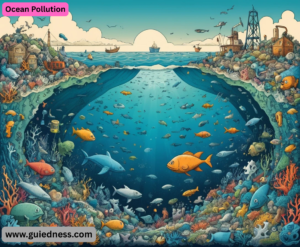
The Main Pollutants: What’s Poisoning Our Oceans?
Plastic Pollution (The Most Visible Culprit)
- Scale: Millions of tons of plastic enter the ocean every year. It’s estimated that by 2050, there could be more plastic than fish (by weight) in the ocean.
- Types: Plastic bags, bottles, food wrappers, fishing nets, and single-use items.
- Microplastics: Larger plastics break down into tiny particles smaller than 5mm. These come from synthetic clothing fibers, microbeads in cosmetics, and degraded plastic debris. They are now found everywhere, from the deepest ocean trenches to Arctic ice.
Chemical Pollution and Nutrient Runoff
- Agricultural Runoff: Fertilizers and pesticides from farms are washed into rivers and eventually the ocean. They cause eutrophication—a process where excess nutrients (like nitrogen and phosphorus) trigger massive algal blooms. When these algae die and decompose, they consume oxygen, creating “dead zones” where most marine life cannot survive.
- Industrial Waste: Factories discharge heavy metals (e.g., mercury, lead), toxic chemicals, and other pollutants directly into waterways.
- Oil Pollution: Comes from large-scale spills from tankers and offshore drilling rigs, as well as smaller, chronic leaks from ships and urban runoff.
Ocean Acidification (The “Invisible” Pollution)
- Cause: The ocean absorbs about 25-30% of the carbon dioxide (CO₂) released into the atmosphere from burning fossil fuels.
- Effect: This CO₂ reacts with seawater to form carbonic acid, lowering the pH of the ocean. This makes it difficult for corals, shellfish, and plankton to build their calcium carbonate shells and skeletons, threatening the entire marine food web.
Noise Pollution
- Sources: Shipping traffic, sonar from military vessels, underwater construction, and seismic airguns used for oil and gas exploration.
- Impact: This disrupts the communication, navigation, feeding, and mating behaviors of marine mammals like whales and dolphins, who rely on sound.
Other Pollutants
- Sewage and Wastewater: Untreated or partially treated sewage introduces pathogens and excess nutrients.
- Marine Debris: Abandoned, lost, or discarded fishing gear (“ghost nets”) continue to trap and kill marine life for years.
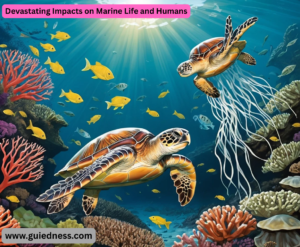
Devastating Impacts on Marine Life and Humans
- The consequences of ocean pollution are far-reaching and interconnected.
On Marine Ecosystems:
- Entanglement and Ingestion: Sea turtles mistake plastic bags for jellyfish, birds feed plastic to their chicks, and seals get tangled in fishing nets, leading to injury, starvation, and death.
- Habitat Destruction: Coral reefs are smothered by sediment and chemicals, while plastic debris damages sensitive ecosystems like mangroves and seagrass beds.
- Bioaccumulation and Biomagnification: Toxins like mercury and PCBs are absorbed by small organisms and become concentrated as they move up the food chain. Top predators, like tuna and whales (and humans who eat them), end up with dangerously high levels of toxins in their bodies.
On Human Health and Economy:
- Contaminated Seafood: Pollutants in the ocean can end up on our dinner plates, posing health risks.
- Damage to Fisheries and Aquaculture: Dead zones and toxic algae blooms can wipe out fish stocks, harming the livelihoods of coastal communities.
- Impact on Tourism: Polluted beaches and dying coral reefs deter tourists, crippling local economies that depend on them.
- Climate Regulation: A sick ocean is less effective at absorbing CO₂ and regulating the global climate.
What Can Be Done? Solutions and the Path Forward
- Solving ocean pollution requires a multi-pronged approach involving governments, industries, and individuals.
At the Source: Reduce and Regulate
- Plastic Bans and Policies: Governments must implement and enforce bans on single-use plastics, promote Extended Producer Responsibility (EPR), and invest in circular economy models.
- Improved Wastewater Treatment: Upgrading infrastructure to prevent raw sewage and industrial waste from entering waterways.
- Sustainable Agriculture: Promoting farming practices that reduce fertilizer and pesticide runoff.
Innovation and Cleanup
- River Interception: Stopping plastic at the source—rivers—is more effective than cleaning the open ocean. Technologies like interceptors and booms can capture waste before it reaches the sea.
- Open Ocean Cleanup: While challenging, projects like The Ocean Cleanup are developing technologies to remove plastic from ocean gyres.
- Biodegradable Alternatives: Investing in research and development of truly biodegradable materials to replace conventional plastics.
Individual Actions (Collective Power)
- Refuse, Reduce, Reuse, Recycle: Minimize your use of single-use plastics. Carry a reusable water bottle, bag, and coffee cup.
- Make Conscious Choices: Avoid products with microbeads, choose sustainable seafood, and properly dispose of chemicals and medicines.
- Participate in Cleanups: Join local beach or river cleanup efforts.
- Spread Awareness and Advocate: Educate others and support policies and companies that are committed to protecting the ocean.
Emerging and Overlooked Threats
Deep-Sea Mining:
- The Issue: The deep ocean floor contains valuable nodules rich in cobalt, nickel, and other metals. Mining these involves massive machines scraping the seabed, which is a pristine and slow-growing ecosystem.
- The Pollution: This process creates immense sediment plumes that can travel for hundreds of kilometers, smothering filter-feeding organisms like corals and sponges. It also releases toxic metals trapped in the seabed into the water column.
Shipbreaking:
- The Issue: At the end of their life, large ships are often run aground on beaches in South Asia (e.g., India, Bangladesh) to be dismantled by hand.
- The Pollution: Asbestos, heavy metals, PCBs, and residual oil leak directly onto the beach and into the coastal water, creating catastrophic local pollution and exposing workers to extreme health risks.
Pharmaceutical Pollution:
- The Issue: Pharmaceuticals and personal care products (PPCPs) pass through our bodies and wastewater treatment plants, which are not designed to filter them out.
- The Impact: These biologically active compounds, including hormones (from birth control), antidepressants, and antibiotics, are found in coastal waters. They can cause gender shifts in fish, alter behavior, and contribute to antibiotic resistance.
Thermal Pollution:
- The Issue: Power plants and industrial facilities often use seawater for cooling and then discharge it back into the ocean at a significantly higher temperature.
- The Impact: This localized warming can create “thermal shocks,” killing temperature-sensitive organisms like corals and disrupting local ecosystems. It also reduces the water’s capacity to hold dissolved oxygen.
The Nuanced Challenges of Plastic Pollution
- The “Biodegradable” Plastic Myth: Many “biodegradable” plastics only break down in industrial composting facilities under high heat, not in the cool ocean environment. In the sea, they behave much like conventional plastic.
- The Cleanup Dilemma: Cleaning up microplastics from the open ocean is often compared to “sweeping the entire Sahara desert with a dustpan and brush.” It’s technologically fantastically difficult and energy-intensive. Furthermore, large-scale cleanup devices can inadvertently harm neuston—a community of organisms that live at the ocean’s surface and are a critical part of the food web.
- The Source of Microplastics: While microbeads are a known issue, the largest source of microplastics is synthetic textiles (like polyester and nylon). A single wash of clothing can release hundreds of thousands of microfibers that bypass treatment plants.
The Human and Economic Toll in Detail
- Public Health: The bioaccumulation of toxins like mercury (from industrial pollution) in large predatory fish (tuna, swordfish) is a direct threat to human neurological development, especially in fetuses and children.
- Economic Costs: A 2020 study estimated that marine plastic pollution alone costs the global economy an estimated $2.5 trillion per year in damaged ecosystems, losses for fisheries and tourism, and cleanup costs.
- Food Security: For billions of people who rely on fish as their primary source of protein, the depletion of fish stocks due to pollution, dead zones, and habitat destruction is a direct threat to their food security and cultural way of life.
- Climate Connection: A polluted and stressed ocean is less resilient to climate change. For example, a coral reef already weakened by chemical pollution and plastic debris will bleach and die more quickly when water temperatures rise.
Beyond Basic Solutions: Systemic Change and Innovation
The “Upstream” Solution: A Circular Economy
The most effective solution is to stop waste at its source. This means moving from a “take-make-dispose” linear model to a circular economy:
- Redesign: Design products for durability, repairability, and recyclability from the start.
- Reimagine Systems: Invest in new delivery models like refillable containers for everything from detergent to groceries.
- Shift Responsibility: Strong Extended Producer Responsibility (EPR) laws make companies financially and physically responsible for the entire lifecycle of their packaging, creating a powerful incentive to reduce waste.
Technological and Policy Innovations
- Wastewater Treatment Upgrades: Implementing advanced treatment methods like ozonation or activated carbon filtration can effectively remove microplastics and pharmaceutical residues.
- International Treaties: The UN Treaty on the High Seas (BBNJ) and the ongoing work for a Global Plastics Treaty are crucial for creating binding international laws to protect areas beyond national jurisdiction and to manage plastic production and waste.
- “Blue Finance”: Encouraging investment in sustainable ocean-based projects, like green ports, sustainable shipping, and eco-tourism, through blue bonds and other financial instruments.
Individual Actions with High Impact
- Become a Citizen Scientist: Use apps to report pollution levels or identify litter, contributing to global data sets.
- Vote with Your Wallet: Support B Corp certified companies and brands that are transparent about their supply chains and packaging.
- Demand Corporate Accountability: Write to companies and ask them to reduce unnecessary packaging and switch to reusable/refillable systems.
- Wash Smarter: Using a Guppyfriend washing bag or installing a washing machine filter can capture up to 90% of microfibers.
- Support Sustainable Seafood: Use guides from the Marine Stewardship Council (MSC) or Seafood Watch to make informed choices.