
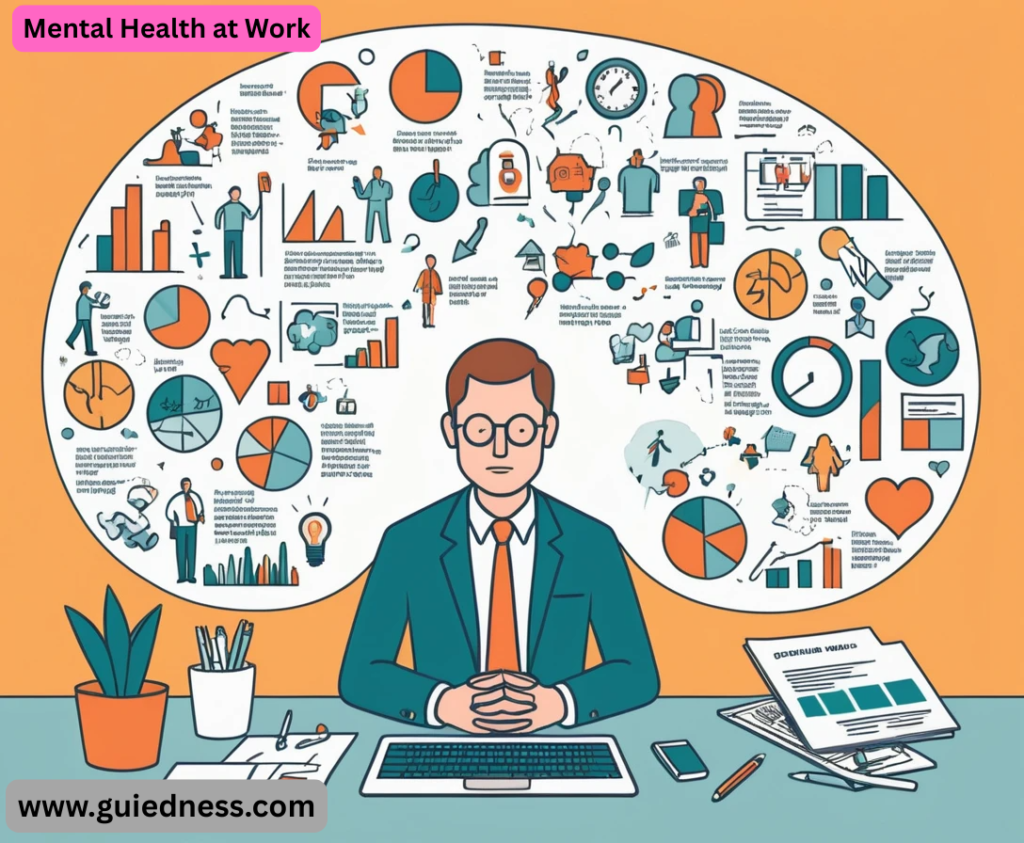

Mental Health at Work Of course. Mental health at work is a critical and increasingly recognized issue that affects employees’ well-being, productivity, and the overall health of an organization.
Here’s a comprehensive overview of mental health at work, covering its importance, common challenges, and actionable strategies for both employers and employees.
Why Mental Health at Work Matters
- Ignoring mental health in the workplace has significant costs, while addressing it offers clear benefits:
For Employees:
- Improved Well-being: Reduced stress, anxiety, and burnout.
- Higher Job Satisfaction: A supportive environment increases engagement and loyalty.
- Better Performance: Mental well-being is linked to improved concentration, creativity, and problem-solving.
- Physical Health: Chronic stress can lead to physical issues like heart disease and a weakened immune system.
For Employers:
- Increased Productivity: Mentally healthy employees are more focused and efficient.
- Reduced Absenteeism and Presenteeism: Presenteeism (working while unwell and being less productive) is a major cost to businesses.
- Lower Turnover: A supportive culture fosters loyalty, reducing the high costs of recruiting and training new staff.
- Enhanced Reputation: Companies known for caring about their employees attract top talent.
- Improved Innovation: A psychologically safe environment encourages risk-taking and new ideas.
Common Mental Health Challenges in the Workplace
- Burnout: A state of emotional, physical, and mental exhaustion caused by prolonged or excessive stress. It’s characterized by cynicism, feelings of reduced accomplishment, and depletion.
- Stress & Anxiety: Constant pressure, tight deadlines, overwhelming workloads, and a lack of control can trigger chronic stress and anxiety disorders.
- Depression: Can be exacerbated by a toxic work environment, job insecurity, or bullying. It affects energy levels, motivation, and the ability to concentrate.
- Isolation & Loneliness: Especially prevalent in remote or hybrid work settings, where watercooler chats and informal connections are limited.
- Stigma & Fear of Disclosure: Many employees fear being judged, passed over for promotions, or even losing their jobs if they speak up about their mental health.
What Employers & Organizations Can Do
- Creating a mentally healthy workplace requires a systemic, top-down approach.
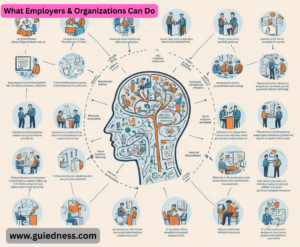
Cultivate a Supportive Culture:
- Leadership Buy-in: Senior leaders must champion mental health initiatives and model healthy behaviors (e.g., not sending emails late at night, taking vacations).
- Psychological Safety: Foster an environment where employees feel safe to speak up, share ideas, and admit mistakes without fear of punishment.
- Open Dialogue: Regularly talk about mental health to normalize the conversation. This can be through newsletters, team meetings, or dedicated workshops.
Implement Clear Policies & Resources:
- Comprehensive EAP (Employee Assistance Program): Offer confidential counseling and support services for employees and their families.
- Clear Mental Health Policies: Have explicit policies on mental health, including anti-discrimination, reasonable accommodations, and a clear process for seeking help.
- Robust Health Insurance: Ensure health plans provide adequate coverage for mental health care, including therapy and psychiatry.
Train Managers:
- Mental Health First Aid: Train managers to recognize the signs of mental distress and have compassionate, supportive conversations.
- People-Focused Management: Equip managers with skills to manage workloads, provide constructive feedback, and support their team members’ well-being.
Promote Work-Life Balance:
- Flexible Work Arrangements: Offer flexibility in hours and location (remote/hybrid options) where possible.
- Respect Boundaries: Encourage employees to take their full lunch breaks, use their paid time off, and disconnect after work hours.
- Review Workloads: Ensure workloads are realistic and manageable. Regularly check in on capacity.
What Employees Can Do
- Your mental health is your priority, and you have agency in protecting it.
Set Boundaries:
- Communicate Limits: Be clear about your working hours and availability. Learn to say “no” or renegotiate deadlines when your plate is full.
- Take Breaks: Step away from your desk during the day. Use your vacation days to fully recharge.
Practice Self-Care & Stress Management:
- Incorporate Healthy Habits: Prioritize sleep, nutrition, and physical activity.
- Mindfulness & Relaxation: Use techniques like meditation, deep breathing, or going for a walk to manage stress in the moment.
- Hobbies & Connections: Make time for activities and people you enjoy outside of work.
3. Communicate Your Needs:
- Talk to Your Manager: If you’re struggling, have a conversation with your manager. You don’t need to disclose a diagnosis, but you can say, “I’ve been feeling overwhelmed by my workload, can we discuss priorities?”
- Ask for Accommodations: If you have a diagnosed condition, you may be legally entitled to reasonable accommodations (e.g., flexible schedule, quiet workspace).
Know Your Resources:
- Utilize Your EAP: This is a confidential and free resource. Use it for short-term counseling, legal advice, or financial planning.
- Reach Out to HR: HR can provide information on policies, benefits, and your options.
Advanced Strategies and Nuanced Considerations
- For Employers & Organizations: Building a Systemic Approach
Move from “Awareness” to “Action” and “Prevention”:
- Many companies stop at mental health awareness campaigns. The next step is to build systems that prevent harm.
- Conduct a “Psychosocial Risk Assessment”: Proactively identify workplace factors that cause harm. This includes auditing for:
- Unmanageable Workload: Are deadlines consistently unrealistic?
- Low Job Control: Do employees have autonomy over how they do their work?
- Lack of Role Clarity: Are job descriptions and responsibilities clear?
- Poor Environmental Conditions: This includes noise, lighting, and ergonomics, but also the digital environment (e.g., constant notification overload).
- Toxic Culture: Are there instances of bullying, micromanagement, or incivility?
- Implement “Workload Planning”: Before launching a new project, explicitly discuss and resource the mental effort required, not just the tasks.
Rethink Performance Management:
- Traditional performance reviews can be a significant source of anxiety.
- Adopt Continuous Feedback: Replace annual, high-stakes reviews with regular, low-stakes check-ins focused on growth and support.
- Focus on Outcomes, Not Hours: Measure success by what is achieved, not by how long someone is logged in. This is crucial for combating presenteeism and supporting flexible work.

Design for Connection in Hybrid/Remote Settings:
Isolation is a modern workplace epidemic.
- Create “Anchor Points”: Establish regular, non-negotiable team meetings that are for connection, not just task updates. Start with a “check-in” round.
- Facilitate “Micro-Interactions”: Recreate the “watercooler” digitally. Use platforms like Donut on Slack to randomly pair colleagues for virtual coffee chats.
- Invest in In-Person Retreats: For distributed teams, periodic in-person gatherings are invaluable for building trust and social capital.
mpower Mental Health Champions:
- Go beyond training managers. Train a network of volunteer employees as “Mental Health First Aiders” or “Champions.” These are peer supporters who can act as a first point of contact, reducing stigma and guiding colleagues to formal resources.
- For Employees: Advanced Self-Advocacy and Coping
Master the Art of “Job Crafting”:
- This is a proactive way to align your job with your strengths and passions, increasing engagement and reducing burnout.
- Task Crafting: Change the scope of your tasks. Can you delegate parts you dislike? Can you take on a small project that energizes you?
- Relational Crafting: Intentionally change who you interact with. Seek out a mentor, collaborate with a different team, or offer to onboard a new hire.
- Cognitive Crafting: Reframe how you see your work. Instead of “I just process invoices,” think, “I ensure our suppliers get paid on time, which maintains our company’s reputation and partnerships.”
Develop a “Mental Health Toolkit”:
Know what you need before you’re in crisis.
- The 5-Minute Reset: Have a go-to list of things that can calm your nervous system in 5 minutes (e.g., box breathing, a walk around the block, a funny video, stretching).
- The “Stop & Assess”: When feeling overwhelmed, ask yourself: “Am I Hungry, Angry, Lonely, or Tired?” (HALT). Addressing these basic needs can often resolve a significant part of the stress.
- Digital Detox Rituals: Create a hard stop to your workday. This could be a specific playlist you listen to, a ritual like shutting down your computer and covering it with a cloth, or a short walk to signal the transition from “work mode” to “home mode.”
Navigate Difficult Conversations with Your Manager:
- Prepare for these talks like you would for any important meeting.
- Use a Framework: The Situation-Behavior-Impact (SBI) model is very effective.
- Mental Health at Work Situation: “Over the past three weeks, since the Project X launch…”
- Behavior: “…my workload has increased with daily urgent requests and late-night deliverables.”
- Impact: “…This is impacting my ability to focus on strategic priorities, and I’m starting to feel burned out. I’m concerned about the sustainability of this pace.”
- Propose a Solution: Come with a suggestion. “I would like to propose we reassess the priority of these tasks, or explore if we can get temporary support to handle the urgent requests.”
Addressing Specific Complex Scenarios
- Returning to Work After Leave: Create a structured, phased return-to-work plan. The first week should not be about diving back in, but about reconnecting with the team, catching up on changes, and managing energy.
- Supporting a Colleague: Don’t try to be their therapist. Use empathetic statements and open-ended questions: “I’ve noticed you seem a bit stressed lately, and I’m thinking of you. How are you managing?” Then, listen without judgment and signpost them to professional help (like the EAP).
- High-Performers & Burnout: Often, the most dedicated employees are at the highest risk. Managers must watch for signs like working excessively long hours, perfectionism, and an inability to disconnect, and actively encourage them to take breaks.
Measuring Success: Beyond Utilization Rates
- Don’t just measure EAP utilization. Track metrics that reflect the health of your organization:
- Voluntary Turnover Rates: Especially in high-stress departments.
- Employee Engagement Survey Scores: Drill down on questions related to workload, support, and psychological safety.