
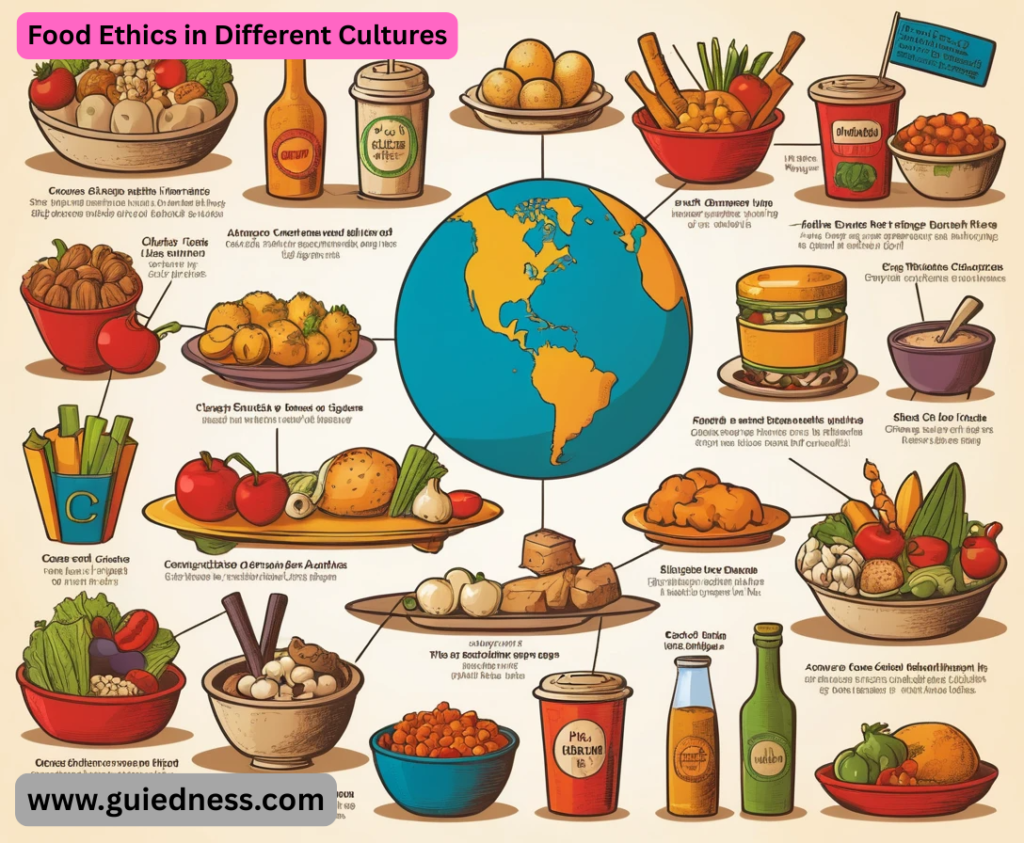

Food Ethics in Different Cultures Of course. This is a fascinating and complex topic. Food ethics encompasses the moral principles that guide our choices around what we eat, how it’s produced, and its impact on the world. These principles are deeply intertwined with culture, religion, history, and environment.Here’s a breakdown of food ethics across different cultures, exploring key themes and specific examples.

Core Ethical Frameworks Influencing Food Choices
- While cultures vary immensely, most ethical considerations around food fall into a few major categories:
- Religious & Spiritual: Dietary laws that define what is pure/impure, sacred/profane (e.g., Halal, Kosher, Hindu vegetarianism).
- Environmental & Ecological: Considerations about sustainability, resource use, and the impact of agriculture on the planet.
- Animal Welfare: Concerns about the treatment of animals raised for food.
- Social Justice: Issues of fair labor practices, equitable food distribution, and the impact of food choices on communities.
- Health & Well-being: Beliefs about how food affects the body, mind, and spirit.
- Ethical Frameworks in Specific Cultural and Religious Contexts
Hinduism (Ahimsa and Purity)
- Food Ethics in Different Cultures Core Ethical Principle: Ahimsa (non-violence). This principle promotes causing the least amount of harm to all living beings.
- Key Practices:
- Vegetarianism: A significant portion of Hindus are vegetarian, believing that killing animals for food is a violation of ahimsa. The cow is especially revered as a symbol of life and motherhood.
- Sattvic Diet: Many Hindus follow a “sattvic” diet, which emphasizes “pure” foods that are thought to promote clarity and calmness of mind. This includes fruits, vegetables, grains, and dairy, while avoiding “rajasic” (stimulating, like onions and garlic) and “tamasic” (impure, like meat and alcohol) foods.
- Ethical Focus: Primarily on animal welfare and spiritual purity.
Islam (Halal)
- Core Ethical Principle: Food must be Halal (permissible) as defined by Islamic law (Shariah). The focus is on purity, cleanliness, and obedience to God’s commands.
- Key Practices:
- Prohibited Foods: Pork, blood, carnivorous animals, and animals slaughtered without dedication to Allah are strictly forbidden (Haram).
- Slaughter Method (Dhabihah): An animal must be slaughtered by a sane adult Muslim with a sharp knife, swiftly cutting the throat while invoking the name of Allah. This method is intended to minimize the animal’s suffering and drain all blood, which is considered unclean.
- Fair Trade: Earning money through the trade of Haram goods (e.g., alcohol) is also considered unethical.
- Ethical Focus: Spiritual obedience, purity, and animal welfare (through prescribed slaughter methods).
Judaism (Kashrut)
- Core Ethical Principle: Adherence to Kashrut (Jewish dietary laws). These laws, found in the Torah, are seen as a divine commandment and a way to sanctify everyday life.
- Key Practices:
- Permitted Animals: Only animals that chew cud and have cloven hooves (e.g., cows, sheep) are permitted. Specific birds and fish with fins and scales are allowed.
- Separation of Meat and Dairy: Perhaps the most well-known rule is the strict separation of meat and dairy products, extending to utensils, cookware, and even waiting periods between eating them.
- Slaughter Method (Shechita): Similar to Halal, a trained ritual slaughterer (shochet) must use a perfectly sharp knife to make a swift, deep cut across the throat, ensuring a quick death with minimal pain.
- Ethical Focus: Spiritual discipline, holiness, and community identity. The modern debate within Judaism also increasingly incorporates animal welfare and environmental ethics (tikkun olam – repairing the world).
Buddhism (Compassion for All Beings)
- Core Ethical Principle: The First Precept: to refrain from taking life. Compassion (karuna) for all sentient beings is paramount.
- Key Practices:
- Varied Interpretation: Buddhist practice varies by region. Many Mahayana Buddhists (e.g., in China, Vietnam) are strictly vegetarian. Theravada Buddhists (e.g., in Sri Lanka, Thailand) may eat meat if it was not specifically killed for them.
- Mindful Eating: The practice of mindfulness extends to food, encouraging gratitude for the life sacrificed and awareness of the interconnected chain of events that brought the food to the plate.
- Ethical Focus: Minimizing harm, compassion, and mindfulness.

ndigenous Cultures (Reciprocity and Balance)
- Core Ethical Principle: Reciprocity and living in balance with nature. Food is not a commodity but a gift from the natural world that requires respect and gratitude.
- Key Practices:
- Food Ethics in Different Cultures Sustainable Hunting & Gathering: Many indigenous cultures have practices designed to ensure species survival, such as taking only what is needed, using every part of an animal, and performing rituals of thanks to the animal’s spirit.
- Sacred Relationship with Land: Food systems are deeply connected to a specific place and its ecology. The concept of “stewardship” is stronger than “ownership.”
- Ethical Focus: Environmental sustainability, respect for non-human life, and intergenerational justice.
Modern Secular Ethical Movements (Cross-Cultural)
- These movements are not tied to a single culture but are gaining traction globally, often interacting with traditional frameworks.
- Vegetarianism & Veganism: Primarily driven by concerns for animal welfare, environmental sustainability (reducing greenhouse gas emissions from livestock), and human health.
- Locavorism: The ethical choice to eat food grown locally to reduce the carbon footprint of transportation and support local economies and farmers.
- Fair Trade: Focuses on social justice, ensuring that farmers and producers in developing countries receive fair prices and work under safe conditions.
- Food Justice: Addresses systemic inequalities in the food system, such as “food deserts” (areas with limited access to affordable, nutritious food) and the rights of agricultural workers.
Contrasts and Tensions
- Animal Slaughter: The Western secular animal rights movement often views ritual slaughter (Halal, Kosher) as inhumane, while adherents argue that their methods are swift and prescribed by a higher ethical law that also respects the animal.
- Individual vs. Community: Secular ethics often emphasize individual choice (e.g., “my personal carbon footprint”), while many traditional frameworks emphasize communal obligation and divine commandment.
- Universal vs. Relative: Is there a universal standard for food ethics (e.g., all animals deserve certain rights), or are these ethics relative to cultural and religious context? This is a central debate.
Chinese Cuisine (Balance and Harmony)
- Core Ethical Principle: Food is medicine. The goal is to maintain balance and harmony (阴阳 – Yīn Yáng) within the body and with the natural world.
- Key Practices:
- Hot (Yang) and Cold (Yin) Foods: Foods are classified not by temperature but by their innate properties. A proper meal balances these to maintain health. For example, a pregnant woman (in a “cold” condition) might be advised to avoid “cold” foods like watermelon and eat more “warm” foods like ginger.
- Taoist Influence: Traditional Taoist thought often promotes vegetarianism, not strictly from a doctrine of non-harm, but as a way to achieve longevity and spiritual purity. It was believed that eating violent, strong animals would transfer those qualities to the eater, disrupting inner peace.
- Waste as an Ethical Violation: The common greeting “你吃了吗?” (Have you eaten?) underscores the cultural importance of food. Leaving food on one’s plate can be seen as disrespectful to the labor that produced it and a failure to achieve harmony with the resources provided. This makes the concept of “doggy bags” standard practice, in contrast to some Western cultures where it was once frowned upon.
- Ethical Focus: Health, holistic well-being, harmony with nature, and avoidance of waste.
Japanese Washoku (Respect and Seasonality)
- Core Ethical Principle: 「I’ll enjoy having this」 (Itadakimasu) – literally “I humbly receive.” This phrase before eating expresses gratitude to all living things that gave their life, the farmers, the preparers, and the natural world.
- Food Ethics in Different Cultures Key Practices:
- Mottainai: A concept translating to “what a waste.” It conveys a sense of regret concerning waste and embodies a deep respect for resources. It encourages using every part of an ingredient.
- Seasonality (Shun): Eating food at the peak of its season is not just for flavor; it’s an ethical choice to align with natural cycles, support local producers, and reduce the environmental cost of transportation and storage.
- Aesthetics and Respect: The meticulous presentation of food is a form of respect for the ingredient itself and the person being served. It honors the beauty and sacrifice of the natural world.
- Ethical Focus: Gratitude, minimizing waste, respect for ingredients, and sustainability through seasonality.
The Ethical Dimensions of “Taboo” Foods
- Every culture has its food taboos, and the ethics behind them are rarely about taste or nutrition. They are powerful markers of identity.
- Dog Meat: Consumed in parts of Korea, China, and Vietnam, it is vehemently rejected in Western cultures. The ethics are a classic clash:
- For: Argues it’s a matter of cultural tradition and no different ethically from eating pigs or cows, which are equally intelligent.
- Against: Views dogs as companion species (“pets”) with a unique cross-species bond with humans, making their consumption a form of betrayal.
- Insects (Entomophagy): A staple protein source in many parts of Asia, Africa, and Latin America.
- Ethical Argument For: Incredibly sustainable—low land/water use, high protein conversion. The ethical case is environmental.
- Taboo Against: In Western cultures, insects are largely viewed as pests, dirty, and disgusting. The “yuck” factor is a powerful, albeit irrational, ethical boundary.
Modern Tensions and Globalized Ethics
- The global food market creates constant ethical dialogue and conflict.
- Cultural Appropriation vs. Appreciation:
- When a multinational company mass-markets and profits from a dish deeply rooted in a specific culture’s history and struggle (e.g., tacos, curry), without acknowledgment or benefit to that culture, it is often seen as an ethical violation—extracting cultural capital without respect.
- Appreciation involves understanding the context, giving credit, and supporting authentic creators.
The “Local” vs. “Global” Dilemma:
- Food Ethics in Different Cultures Is it more ethical for a environmentally conscious person in Europe to eat local meat (high carbon) or avocados shipped from Mexico (water-intensive, “food miles”)? There is no easy answer, exposing the complexity of modern food ethics.
The Halal/Kosher – Animal Rights Debate:
- As mentioned, this is a prime example of conflicting ethical frameworks.
- Secular Animal Welfare View: Argues that pre-stunning an animal before slaughter is the most humane way to prevent pain and distress.
- Religious View: Argues that their method, performed correctly by a skilled practitioner, is swift and causes immediate loss of consciousness. They see the requirement of pre-stunning as an infringement on religious freedom and argue that industrial factory farming conditions are the real ethical problem, not the moment of death.
Intergenerational Ethics:
- Many indigenous and East Asian philosophies inherently consider the impact of today’s actions on future generations (e.g., the Iroquois Seventh Generation Principle). This is now being adopted by Western environmental movements, arguing that unsustainable fishing, soil depletion, and biodiversity loss are profound ethical failures against those not yet born.