
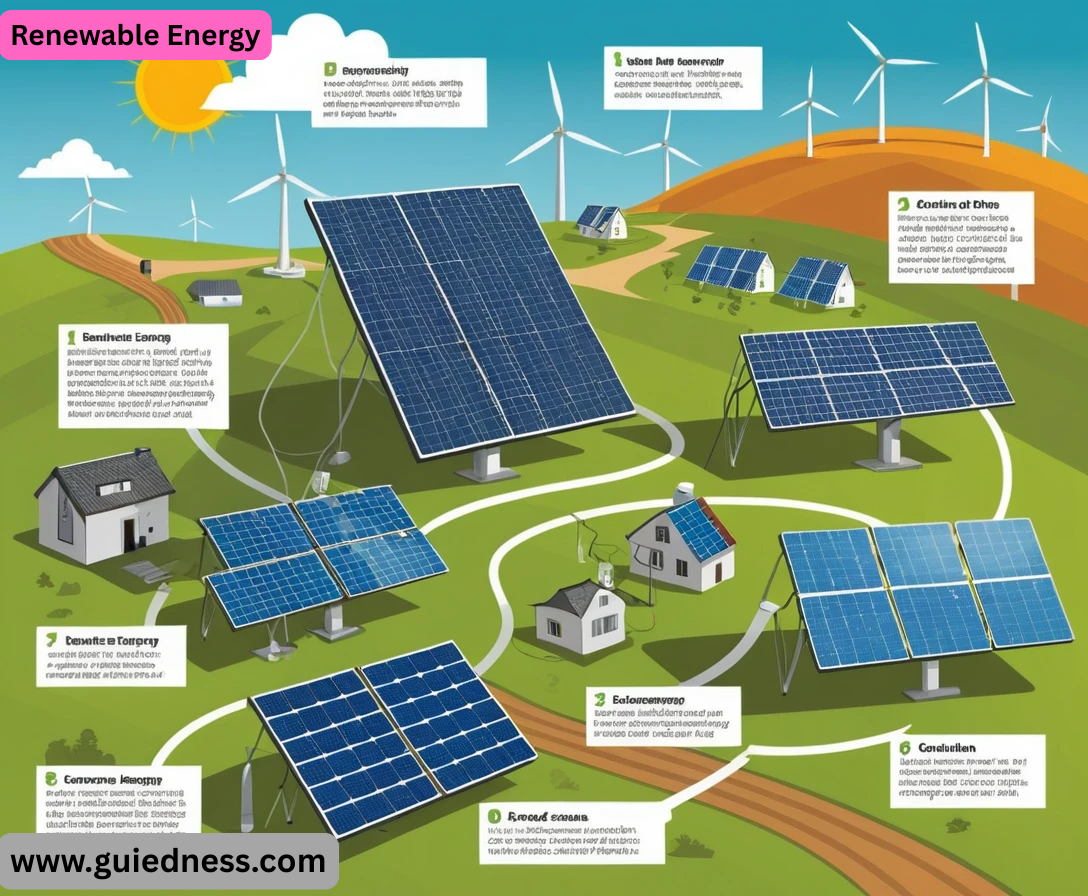
Renewable Energy Of course. Renewable energy is one of the most critical and rapidly evolving topics today. Here’s a comprehensive overview covering what it is, the main types, its importance, and the challenges it faces.
What is Renewable Energy?
- Renewable energy comes from naturally replenishing sources that are virtually inexhaustible on a human timescale. Unlike fossil fuels (coal, oil, and natural gas), which take millions of years to form, renewable sources are constantly being renewed.
- The key principle is harnessing natural energy flows and converting them into useful forms of energy, primarily electricity, but also heat and transportation fuels.
The Main Types of Renewable Energy
Here are the primary sources of renewable energy powering our world today:
Solar Energy
- Source: The sun’s radiation.
How it’s Harnessed:
- Photovoltaics (PV): The most common method. Solar panels made of semiconductor materials (like silicon) convert sunlight directly into electricity.
- Concentrated Solar Power (CSP): Uses mirrors to concentrate sunlight onto a receiver, generating high heat to produce steam that drives a turbine.
- Key Advantages: Abundant, scalable (from small rooftop panels to massive farms), silent, and costs have plummeted dramatically.
- Considerations: Intermittent (only works during the day), requires significant space for large-scale generation, and manufacturing involves some hazardous materials.
Wind Energy
Source: The kinetic energy of moving air.
- How it’s Harnessed: Large wind turbines use blades to capture the wind’s energy, spinning a rotor connected to a generator that produces electricity.
- Key Advantages: Mature technology, cost-competitive with fossil fuels, can be deployed onshore or offshore.
- Considerations: Intermittent (wind doesn’t always blow), visual and potential noise impact, and can affect local wildlife (particularly birds and bats).

Hydropower
Source: The energy of flowing water.
- How it’s Harnessed: Dams or diversion structures channel water through turbines, spinning them to generate electricity. It’s the largest source of renewable electricity globally.
- Key Advantages: Highly reliable, provides consistent baseload power, and offers energy storage through “pumped storage” facilities.
- Considerations: Can have significant environmental and social impacts, including habitat destruction, displacement of communities, and disruption of river ecosystems.
Geothermal Energy
Source: The immense heat from the Earth’s core.
How it’s Harnessed:
- For Electricity: Steam or hot water from underground reservoirs is drilled and used to power turbines.
- For Heating/Cooling: Geothermal heat pumps use the constant temperature of the shallow ground to heat and cool buildings.
- Key Advantages: Provides consistent, reliable baseload power 24/7, independent of weather, and has a very small land footprint.
- Considerations: Location-specific (only viable in geologically active areas), and drilling can be expensive and carries a risk of triggering minor seismic activity.
Biomass Energy
- Source: Organic material from plants and animals (e.g., wood, agricultural crops and waste, municipal solid waste).
- How it’s Harnessed: Biomass can be burned directly for heat or electricity, or converted into biofuels (like ethanol and biodiesel) for transportation.
- Key Advantages: Can provide constant power and help manage waste.
- Considerations: Not carbon-neutral if not managed sustainably. Burning biomass releases CO₂, and its sustainability depends on regrowing the feedstock. Can also compete with food production for land.
Ocean Energy (Emerging)
- Source: The kinetic and thermal energy of the ocean.
How it’s Harnessed:
- Tidal Energy: Uses the rise and fall of tides.
- Wave Energy: Captures the energy from surface waves.
- Ocean Thermal Energy Conversion (OTEC): Uses temperature differences between warm surface water and cold deep water.
- Key Advantages: Predictable and abundant.
- Considerations: Still largely in the research and development phase, high costs, and potential impacts on marine ecosystems.
Why is Renewable Energy So Important?
- Climate Change Mitigation: This is the primary driver. Renewables produce little to no greenhouse gas emissions during operation, making them essential for replacing fossil fuels and achieving global climate goals (like the Paris Agreement).
- Energy Security & Independence: Reduces reliance on imported fossil fuels, enhancing national security and insulating economies from volatile global price shocks.
- Economic Development: Creates jobs in manufacturing, installation, and maintenance.
- Public Health: Reduces air and water pollution caused by burning fossil fuels, leading to fewer cases of asthma, heart disease, and premature deaths.
- Inexhaustible Supply: Unlike finite fossil fuels, renewable sources will never run out, ensuring a long-term, sustainable energy foundation.
Key Challenges & The Path Forward
Despite its benefits, the large-scale integration of renewables faces hurdles:
- Intermittency: The sun doesn’t always shine, and the wind doesn’t always blow. This variability can challenge grid stability.
- Solution: Energy Storage (like advanced batteries and pumped hydro), a smarter grid, and a diversified mix of renewables.
- Upfront Cost: While operational costs are low, the initial capital investment for technologies like solar and wind can be high (though costs continue to fall).
- Location & Resource Dependency: The best resources are often far from population centers (e.g., sunny deserts, windy plains), requiring long-distance transmission lines.
The Future of Renewable Energy
The transition is well underway and accelerating. The future will be defined by:
- Continued Cost Declines: As technology improves and deployment scales, renewables are becoming the cheapest source of new electricity in most of the world.
- Breakthroughs in Energy Storage: Cheaper and more efficient batteries are the key to solving intermittency.
- Policy Support: Government policies, like carbon pricing and renewable energy targets, continue to be crucial catalysts for the transition.
Advanced Concepts and Cutting-Edge Innovations
The field is moving far beyond just installing solar panels and wind turbines.
The Critical Enabler: Energy Storage
- The “holy grail” of renewable energy is cheap, large-scale storage to solve the intermittency problem.
- Next-Gen Batteries: While lithium-ion dominates, research is intense on solid-state batteries (higher energy density, safer), flow batteries (ideal for grid-scale storage), and batteries using abundant materials like sodium-sulfur or iron-air.
- Pumped Hydro Storage: The current workhorse of grid storage, it uses two water reservoirs at different elevations.
- Thermal Storage: Using excess electricity to heat materials like molten salt, which can store the heat for hours or days to generate steam for electricity or provide industrial heat.
Green Hydrogen
- This is a potential game-changer for “hard-to-abate” sectors.
- Process: Using renewable electricity to power electrolyzers that split water (H₂O) into hydrogen (H₂) and oxygen (O₂). The hydrogen is a clean-burning fuel.

Applications:
- Industrial Processes: Replacing “grey hydrogen” (made from natural gas) in fertilizer production and oil refining.
- Heavy Transport: Fuel for ships, airplanes, and long-haul trucks where batteries are too heavy or impractical.
Grid Modernization: The “Smart Grid”
The old, one-way grid is becoming a dynamic, intelligent network.
- Demand Response: Instead of building a power plant for peak demand, utilities can signal smart appliances (like water heaters or EV chargers) to temporarily reduce consumption.
- Advanced Forecasting: Using AI and machine learning to predict sun, wind, and load patterns with incredible accuracy, allowing grid operators to manage variability efficiently.
- Microgrids: Localized grids that can disconnect from the main grid and operate independently.
Next-Generation Technologies
- Agrivoltaics: Co-locating solar panels and agriculture. Specially designed panels can provide shade for certain crops, reduce water evaporation, and increase land-use efficiency.
- Floating Offshore Wind: Installing wind turbines on floating platforms in deep water, where winds are stronger and more consistent. This unlocks vast new areas for development.
- Enhanced Geothermal Systems (EGS): Creating geothermal resources in hot, dry rock by fracturing the rock and circulating water. This could make geothermal power possible almost anywhere, not just in volcanic regions.
- Perovskite Solar Cells: A promising new solar material that is cheaper, more flexible, and more efficient in low light than traditional silicon.
The Economic and Policy Landscape
Drivers of Growth:
- Levelized Cost of Energy (LCOE): The metric for comparing different energy sources. The LCOE for solar and wind has plummeted, now making them the cheapest source of new electricity generation in most parts of the world, even without subsidies.
- Corporate Power Purchase Agreements (PPAs): Major companies like Google, Amazon, and Microsoft are directly signing long-term contracts to buy renewable energy, driven by sustainability goals and the desire for stable electricity prices.
Government Policies:
- Tax Incentives: Credits for installing renewable energy.
- Renewable Portfolio Standards (RPS): Mandates that a certain percentage of a utility’s power must come from renewables.
- Carbon Pricing: Putting a price on carbon emissions makes fossil fuels less economically attractive.
Navigating the Debates and Challenges
The Materials & Supply Chain Challenge
- The Issue: Renewable technologies and batteries require specific critical minerals like lithium, cobalt, nickel, and rare earth elements.
- The Response: Intensive research into recycling (urban mining), finding alternative materials (cobalt-free batteries), and developing more diverse and ethical supply chains.
The “Intermittency vs. Reliability” Debate
The Fossil Fuel Argument: Critics claim a grid reliant on renewables is inherently unstable.
- The Renewable Response: A 100% renewable grid is challenging, but a 100% carbon-free grid is achievable with a diversified portfolio:
- Mix of Sources: Wind and solar complement each other (wind often blows at night).
- Dispersion: A widespread network of wind and solar farms smooths out local weather.
- Baseload from Renewables: Geothermal, hydropower, and biomass can provide constant power.
- Storage & Demand Management: As described above, these are the keys to firming up the grid.