
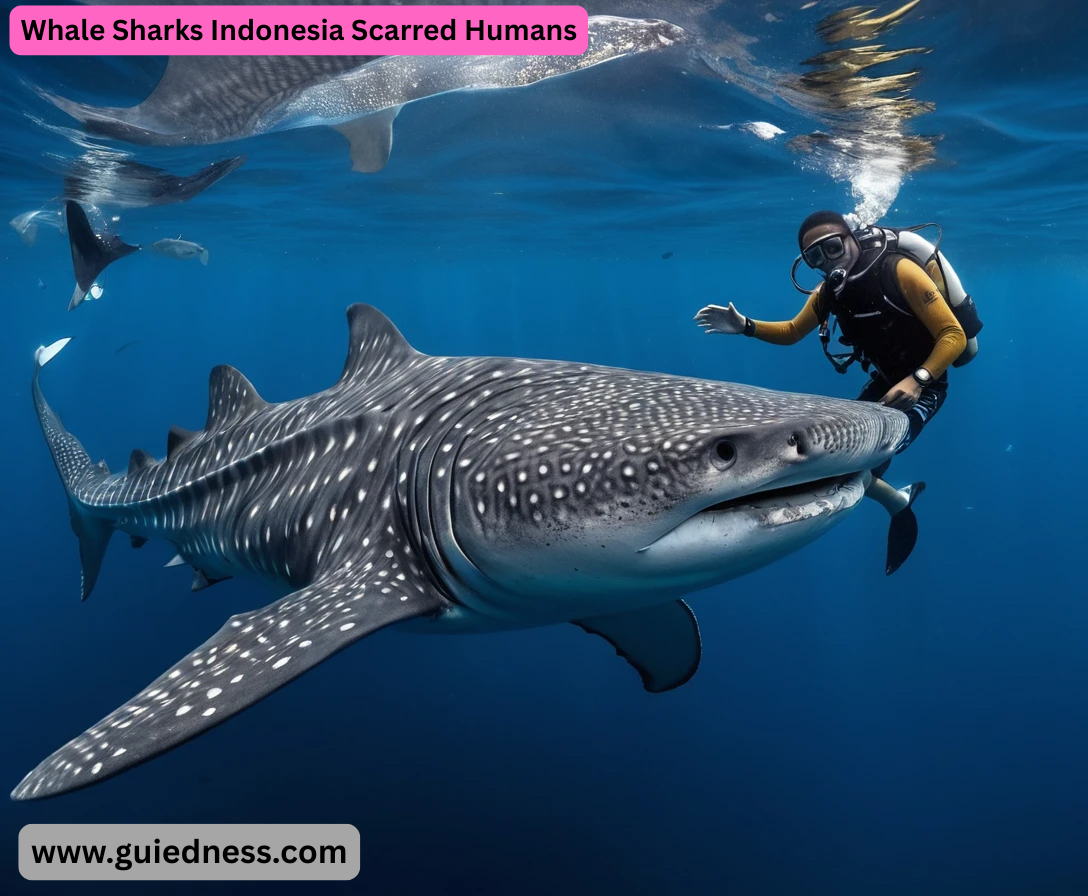
Whale Sharks Indonesia Scarred Humans Of course. The phrase “Whale Sharks Indonesia Scarred Humans” can be interpreted in two main ways: the literal, physical scars left by human interaction on the whale sharks, and the metaphorical scars on the human conscience from witnessing the impact of our actions.

- Here’s a detailed breakdown of both interpretations, focusing on the situation in Indonesia.
Interpretation 1: Humans Have Scarred the Whale Sharks (The Literal Scars)
- This is the most direct and tragic meaning. The gentle giant whale sharks (Rhincodon typus) in Indonesia are visibly scarred due to human activities. These scars are a stark, physical diary of the harm they have endured.
Common Types of Scars and Their Causes:
- Propeller Strikes: Appearance: Deep, parallel gashes or slices on their backs, dorsal fins, and tails.
- Cause: Collisions with boat propellers in busy waterways, especially in areas where tourism and fishing overlap. Locations like Cenderawasih Bay, where whale sharks congregate around bagan (fishing platforms), are particularly high-risk.
Rope Burns and Abrasions:
- Appearance: Raw, worn-away skin, often in a ring around their bodies, mouths, or fins.
- Cause: Entanglement in fishing lines, nets, and ropes. In places like Cenderawasih Bay, whale sharks are known to feed from fishing platforms (bagan) and can get tangled in the anchor lines or nets, causing severe injuries as they struggle to free themselves.
Lesions and Infections from Poor Tourism Practices:
- Appearance: Sores, discolored patches, or damaged skin, particularly around the head and mouth.
- Cause: Unregulated tourism where too many boats and swimmers stress the animals. Touching, riding, or using flash photography can damage their protective mucus layer, leaving them vulnerable to infections.
Evidence of Strikes or Harpoons:
Appearance: Puncture wounds or large, singular scars.
- Cause: While whale sharks are protected in Indonesia, they are still sometimes caught as bycatch or, historically, were hunted.
The Impact of These Scars:
- Physical Impairment: Deep propeller wounds can affect their ability to swim, migrate, and feed efficiently.
- Increased Vulnerability: Open wounds are susceptible to parasites and infections.
- Energetic Cost: Healing from such significant injuries requires a lot of energy, which can impact their growth and reproduction.
- Interpretation 2: The Whale Sharks Have Scarred Humans (The Metaphorical Scars)
This interpretation speaks to the profound psychological and emotional impact on people who witness this damage. The sight of a scarred, 12-meter-long leviathan can leave a lasting mark on a person’s conscience.
Who is “Scarred” and How?
Marine Biologists and Conservationists:
- They experience the “scar” of frustration, grief, and burnout. Documenting the same individuals year after year, watching their scars accumulate, creates a heavy emotional toll. Their work is a constant battle against preventable injuries.
Responsible Tourists and Divers:
- The awe-inspiring experience of swimming with a whale shark can be instantly marred by the sight of a fresh propeller gash. This creates a “scar” of guilt and awareness. Tourists become directly confronted with the consequences of human encroachment on marine life, transforming a magical moment into a sobering lesson in conservation.
Local Communities with a Conservation Ethic:
- In areas like Botubarani or Probolinggo, where whale shark tourism is a vital source of income, many locals see the sharks as valuable community assets. Seeing “their” whale sharks injured is not just an ecological loss but an economic and personal one. It scars their sense of stewardship and hope for a sustainable future.
The Global Conscience:
- Powerful photographs and documentaries showcasing scarred whale sharks (like those from National Geographic or various conservation NGOs) “scar” the wider public. They force us to look at the undeniable evidence of our collective impact, creating a sense of shared responsibility and shame.
The Situation in Indonesia: A Microcosm of the Conflict
- Whale Sharks Indonesia Scarred Humans Indonesia is a global hotspot for whale sharks, but it’s also a place where the conflict between humans and wildlife is starkly visible.
- Cenderawasih Bay National Park: This is the epicenter of the issue. The unique behavior of whale sharks feeding from bagan (fishing platforms) creates an incredible wildlife spectacle but also puts them at extreme risk of entanglement and boat strikes.
- The Tourism Dilemma: Whale shark tourism generates significant revenue and can be a powerful incentive for protection. However, without strict regulations, it becomes part of the problem. The Indonesian government has made efforts to improve guidelines, but enforcement remains a challenge.
- Conservation Efforts: Organizations like WWF Indonesia, Conservation International, and local groups are working tirelessly to:
- Promote responsible tourism: Enforcing no-touch, no-flash, and limited-swimmer rules.
- Work with fishermen: Modifying bagan structures to be safer and promoting best practices to avoid entanglement.
- Advocate for marine protected areas and speed limits for boats.
The Deeper Dive: Specifics of the Scarring
The Anatomy of a Propeller Scar:
- How it Happens: Whale sharks are filter-feeders that often bask near the surface. Their massive size and slow movement make them vulnerable to fast-moving boats. In areas like Cenderawasih Bay, the water is crowded with fishing platform (bagan) support boats and tourist vessels.
- The Aftermath: A propeller doesn’t just cut; it shreds. It can slice through the tough, 10-cm-thick dermis, damaging the muscle beneath. These wounds can take years to heal, leaving permanent, grotesque scars. A shark with a badly damaged tail or dorsal fin will have reduced swimming efficiency, impacting its ability to migrate and find food.
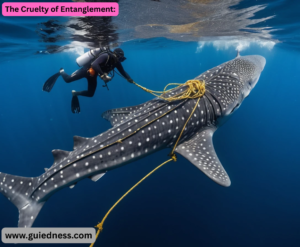
The Cruelty of Entanglement:
- The Process: A whale shark nudging a fishing net to feed on the trapped fish can easily get its head or pectoral fins caught. As it panics and twists, the rope saws back and forth, creating deep, burning wounds. Unlike a quick propeller strike, this is a slow, torturous injury.
- A Specific Case: Researchers have documented individual whale sharks in Indonesia with ropes still embedded in their flesh, the wound actively infected around the foreign object. These “rope scars” are often circular, telling a clear story of a prolonged struggle.
The Invisible Scars: Physiological Stress
- Beyond the Skin: The scars we can’t see are just as damaging. Scientific studies using drone footage and blood samples have shown that uncontrolled tourism causes significant stress to whale sharks.
- The Impact: Constant touching and being surrounded by dozens of swimmers elevates their stress hormones (like cortisol). This can lead to suppressed immune systems, reduced reproductive success, and long-term health decline. The “scar” is internal, a physiological burden imposed by human presence.
- The Human Stories: Who Bears the Scarred Conscience?
The Fisherman’s Dilemma:
- Context: For the fishermen of Cenderawasih Bay, the bagan are their livelihood. The whale sharks arriving to feed are a mixed blessing.
- The Scar: A fisherman might feel a deep, conflicted scar when he sees “his” regular whale shark, one he recognizes and maybe even has a name for, show up with a fresh, grievous wound from a propeller he knows came from a neighboring boat. He is caught between his economic dependency on the sea, a potential cultural reverence for the animal, and the helplessness of being unable to protect it.
The Dive Guide’s Burden:
- Context: Dive guides in places like Nabire or Triton Bay build their careers and lives around these animals. They are the frontline observers.
- The Scar: A guide named Andi (a common name in Indonesia) might say: “I remember when we first found ‘Spotty’ years ago. He was pristine. Now, every season he has a new cut. I point him out to tourists and have to explain the scars. I feel responsible, like I’m part of the problem just by bringing people here. It scars me to see his degradation, season after season.” This is a scar of compassion fatigue and professional guilt.
The Researcher’s Heartbreak:
- Context: Marine biologists like Dr. Mark Erdmann (a real-world vice president of Conservation International’s Asia-Pacific marine programs) have been
studying and advocating for Indonesian whale sharks for decades.
- Whale Sharks Indonesia Scarred Humans The Scar: The emotional scar for a researcher is one of frustrated expertise. They have the data, they know the solutions (e.g., mandatory propeller guards, designated boat lanes, swimmer limits), but implementing them is a slow, bureaucratic, and often underfunded process. Watching a known, studied individual die from a preventable injury is a profound professional and personal failure imposed by systemic inaction.
The Complex Web: Why Does This Keep Happening?
- Economic Pressure: For many, it’s not malice but necessity. Fishermen can’t afford to lose catch or modify their gear without support. Tourism operators, especially after the pandemic, are under pressure to maximize guest numbers, leading to overcrowding.
- Enforcement Gaps: Indonesia has strong laws on paper (Protection Status: PP No. 7/1999, CITES Appendix II). The challenge is vast geography and limited resources for patrols. It’s easy for irresponsible operators to flout the rules.
- Lack of Unified Standards: While some regions have good guidelines, there is no nationally enforced, standardized code of conduct for whale shark tourism. This leads to a “race to the bottom” where irresponsible operators spoil the experience for everyone.
Glimmers of Hope: Healing the Scars
- The story isn’t all bleak. The “scarring” of the human conscience is what fuels change.
Community-Led Initiatives:
- In Botubarani, the local community itself has taken charge, regulating tourist numbers and behavior. They see the whale sharks as a long-term community asset, not just a quick tourist attraction.
Technology and Innovation:
- NGOs are piloting the use of propeller guards on bagan support boats in Cenderawasih Bay.
- Photo-ID databases, where scars are used to identify individuals, are providing critical data to push for stronger protections.
Market Pressure:
- Tour operators committed to sustainability are now promoting “responsible whale shark tours,” educating customers to choose operators who maintain distance and do not touch the animals. Informed tourists can vote with their wallets.