
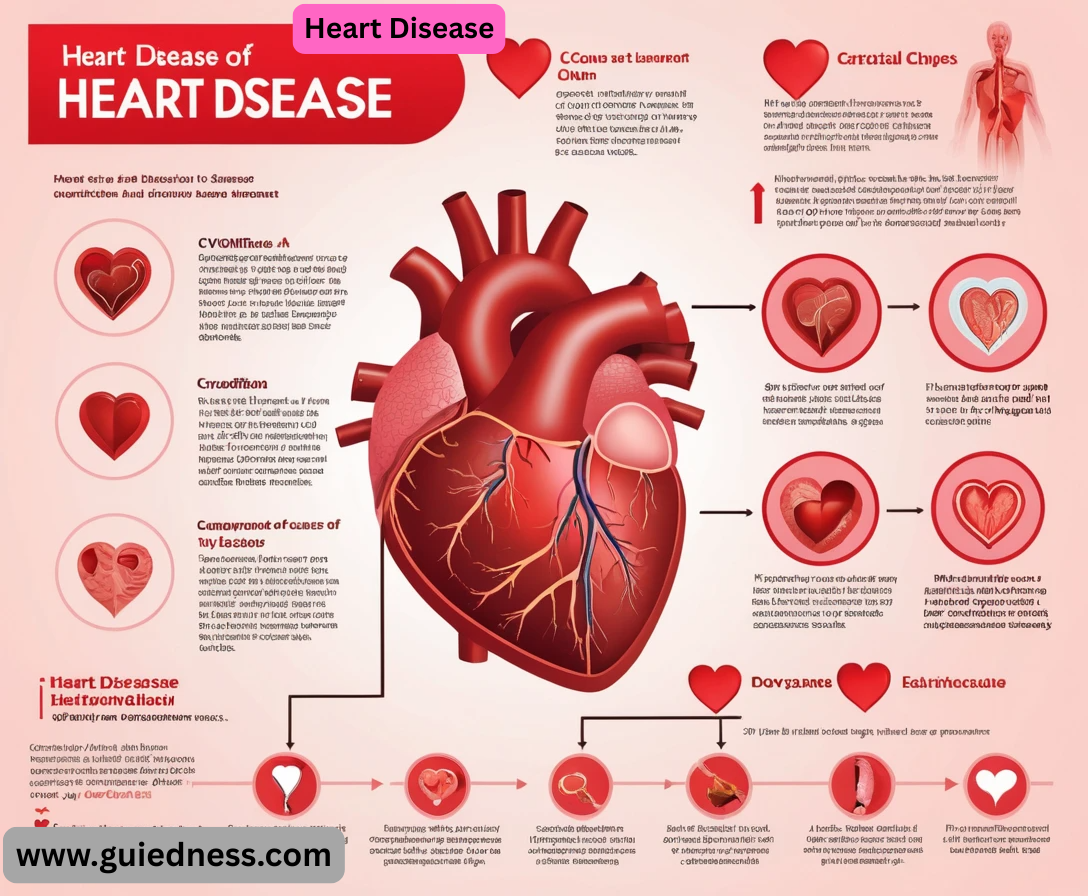
Heart Disease Of course. “Heart disease” is a broad term for a range of conditions that affect the heart. It’s also known as cardiovascular disease (CVD) and is the leading cause of death globally. Here is a comprehensive overview of heart disease, covering its types, causes, symptoms, prevention, and treatment.

What is Heart Disease?
- Heart disease refers to any disorder that affects the heart’s ability to function normally. It’s not a single condition but a category of diseases, with the most common being those involving the blood vessels (coronary arteries).
Common Types of Heart Disease
- Coronary Artery Disease (CAD): The most prevalent form. It occurs when the major blood vessels (coronary arteries) that supply the heart with blood, oxygen, and nutrients become damaged or diseased, often due to plaque buildup (atherosclerosis). This can lead to:
- Angina: Chest pain or discomfort.
- Heart Attack (Myocardial Infarction): When blood flow to a part of the heart is blocked.
- Heart Arrhythmias: Problems with the rate or rhythm of the heartbeat. The heart can beat too fast (tachycardia), too slow (bradycardia), or irregularly.
- Heart Failure: The heart doesn’t pump blood as well as it should. It doesn’t mean the heart has stopped, but that it’s too weak to meet the body’s needs. This is a chronic, long-term condition.
- Heart Valve Disease: One or more of the heart’s four valves don’t open or close properly, disrupting blood flow.
- Cardiomyopathy: A disease of the heart muscle that makes it harder for the heart to pump blood.
- Congenital Heart Disease: Heart structure problems that are present at birth.
- Aortic Disease: Conditions like an aortic aneurysm (a bulge in the aorta, the main blood vessel).
Symptoms of Heart Disease
- Symptoms vary depending on the specific condition, but common signs include:
- Chest pain, tightness, pressure, or discomfort (Angina)
Shortness of breath
- Pain, numbness, weakness, or coldness in the legs or arms (if blood vessels there are narrowed)
- Pain in the neck, jaw, throat, upper abdomen, or back
- Heart palpitations (feeling like your heart is fluttering, pounding, or beating irregularly)
Fatigue
- Dizziness or lightheadedness
- Fainting (syncope)
- Swelling in the legs, ankles, and feet
- CRITICAL: A heart attack has specific warning signs. Call emergency services immediately if you experience:
- Chest pain or pressure, often in the center or left side of the chest.
- Pain or discomfort in one or both arms, the back, neck, jaw, or stomach.
Shortness of breath.
- Cold sweat, nausea, or lightheadedness.
- Symptoms can be different for women, who are more likely to experience shortness of breath, nausea/vomiting, and back or jaw pain without prominent chest pain.
Causes and Risk Factors
The causes depend on the specific type of heart disease. For atherosclerosis (the underlying cause of most heart disease), it’s a combination of factors:
- Non-Modifiable Risk Factors (You Cannot Change):
- Age: Risk increases as you get older.
- Sex: Men are generally at greater risk, but a woman’s risk increases after menopause.
- Race/Ethnicity: Some groups (e.g., African Americans, South Asians) have higher risks.
Modifiable Risk Factors (You Can Change or Manage):
- High Blood Pressure: A major force damaging artery walls.
- High Cholesterol: Leads to plaque buildup in arteries.
- Smoking: Damages the lining of your arteries.
- Diabetes: Significantly increases the risk.
- Obesity & Unhealthy Diet: Diets high in saturated fats, trans fats, salt, and sugar.
- Physical Inactivity: Weakens the heart and contributes to other risk factors.
- Excessive Alcohol Consumption: Can raise blood pressure and contribute to other issues.
- Stress: Unmanaged stress can damage your arteries.
Diagnosis
- Doctors use a variety of tests to diagnose heart disease:
- Physical Exam and Medical History
- Blood Tests (to check cholesterol, triglycerides, and markers of heart damage)
- Electrocardiogram (ECG/EKG) (records the heart’s electrical activity)
- Echocardiogram (an ultrasound of the heart)
- Stress Test (monitoring the heart during exercise)
- Cardiac Catheterization and Angiogram (a thin tube is inserted into a blood vessel to look for blockages)
- CT Scan or MRI of the heart
Treatment
- Treatment is highly individualized and depends on the type and severity of the disease.
- Lifestyle Changes: The foundation of all treatment.
- Heart-Healthy Diet: Like the DASH or Mediterranean diet (rich in fruits, vegetables, whole grains, and lean protein).
Regular Exercise
- Smoking Cessation
- Weight Management
- Stress Management
- Medications: Used to treat symptoms and manage risk factors.
- Cholesterol-lowering drugs (Statins)
- Blood pressure medications (Beta-blockers, ACE inhibitors)
- Blood thinners (Aspirin, Warfarin) to prevent clots
Nitroglycerin (for angina)
Medical Procedures and Surgery:
- Angioplasty and Stent Placement: A catheter with a balloon is used to open a blocked artery, and a stent (a wire mesh tube) is often placed to keep it open.
- Coronary Artery Bypass Grafting (CABG): “Bypass surgery.” A healthy blood vessel from another part of the body is used to create a new path for blood to flow around a blocked coronary artery.
- Pacemaker or ICD Implantation: Devices that help regulate the heartbeat.
Valve Repair or Replacement
Prevention
- Most heart disease is preventable with a healthy lifestyle:
- Don’t smoke or use tobacco.
- Be physically active (aim for at least 150 minutes of moderate exercise per week).
- Eat a heart-healthy diet.
- Maintain a healthy weight.
- Get quality sleep (7-9 hours per night).
- Manage stress through techniques like meditation or yoga.
- Get regular health screenings for blood pressure, cholesterol, and diabetes.
Deeper Dive into Specific Conditions
Coronary Artery Disease (CAD) – The Plumbing Problem
- Atherosclerosis in Detail: This is the process where arteries become narrowed. It starts with damage to the inner lining of an artery (the endothelium). Factors like high blood pressure, smoking, or high cholesterol cause this damage. Over time, cholesterol, fats, and other substances (plaque) build up at the injury site.
- Stable Plaque: This plaque has a thick fibrous cap and grows slowly, eventually causing stable angina (predictable chest pain with exertion).
- Vulnerable Plaque: This is more dangerous. It has a thin, inflamed cap that can rupture suddenly. When it ruptures, a blood clot forms over it, which can completely block the artery, causing a heart attack.
Heart Arrhythmias – The Electrical Problem
- The heart has its own electrical system. Arrhythmias occur when this system malfunctions.
Tachycardia (Too Fast):
- Atrial Fibrillation (A-Fib): The most common serious arrhythmia. This can cause blood to pool and form clots, which can travel to the brain and cause a stroke.
- Ventricular Fibrillation (V-Fib): A life-threatening emergency where the lower chambers (ventricles) quiver uselessly instead of pumping blood. It causes sudden cardiac arrest.
- Bradycardia (Too Slow): Often caused by problems with the heart’s natural pacemaker (the SA node) or the electrical pathways.
Heart Failure – The Pumping Problem
It’s categorized by which part of the heart’s pumping action is affected:
- Heart Failure with Reduced Ejection Fraction (HFrEF) / Systolic Failure: The heart muscle becomes weak and can’t pump (eject) blood out effectively.
- Heart Failure with Preserved Ejection Fraction (HFpEF) / Diastolic Failure: The heart muscle becomes stiff and can’t relax properly to fill with blood between beats.
Advanced Risk Factors & Lesser-Known Symptoms
Emerging Risk Factors:
- High-Sensitivity C-Reactive Protein (hs-CRP): A marker of inflammation in the body. Chronic inflammation plays a key role in atherosclerosis.
- Lipoprotein (a): A type of “bad” cholesterol that is largely genetic and is an independent risk factor.
- Sleep Apnea: This disorder, where breathing repeatedly stops and starts during sleep, strains the cardiovascular system and is strongly linked to high blood pressure, arrhythmias, and heart failure.
- Autoimmune Diseases: Conditions like rheumatoid arthritis and lupus cause chronic inflammation that can damage the heart and blood vessels.
- Mental Health: Chronic depression, anxiety, and social isolation are now recognized as significant risk factors.
Symptoms in Specific Populations:
In Women: Symptoms are often “atypical” and not the classic Hollywood heart attack. They are more likely to experience:
- Unusual fatigue for days (not just after exertion)
- Nausea or vomiting
- Dizziness
- Discomfort in the back, shoulders, or jaw
- Sleep disturbances
In People with Diabetes: They may have “silent” heart attacks with no pain at all due to diabetic nerve damage (neuropathy), making them aware of the attack only through symptoms like sudden shortness of breath or extreme fatigue.
Detailed Diagnostic Tools
- Nuclear Stress Test: A radioactive tracer is injected to see how blood flows to the heart muscle during rest and stress. It’s more precise than a regular stress test.
- Cardiac CT Scan: Can create detailed 3D images of the heart and blood vessels. A Coronary Calcium Scan is a specific type that measures the amount of calcium in the coronary arteries, which is a direct sign of plaque buildup.
- Cardiac MRI: Provides extremely detailed images of the heart’s structure, function, and blood supply. It’s excellent for assessing damage from a heart attack or diagnosing cardiomyopathies.
- Holter Monitor or Event Monitor: Portable ECG devices worn for 24 hours to several weeks to catch intermittent arrhythmias.
Advanced Treatments & Interventions
Medications:
- SGLT2 Inhibitors & GLP-1 Receptor Agonists: Originally for diabetes, these drugs have shown remarkable benefits in reducing heart failure hospitalizations and cardiovascular death, even in people without diabetes.
- ARNIs (Angiotensin Receptor-Neprilysin Inhibitors): A newer class of drug for heart failure that is more effective than older standard medications.
Procedures for Arrhythmias:
- Catheter Ablation: A procedure where thin wires are threaded into the heart to find and destroy (ablate) the tiny areas of heart tissue causing the abnormal rhythm.
Surgical Devices:
- Implantable Cardioverter Defibrillator (ICD): A device implanted in the chest that continuously monitors the heartbeat. If it detects a dangerous rhythm like V-Fib, it delivers an electric shock to reset the heart.
- Left Ventricular Assist Device (LVAD): A mechanical pump implanted in patients with end-stage heart failure. It helps the weakened heart pump blood to the body. It can be a “bridge to transplant” or long-term therapy for those who aren’t transplant candidates.
Transcatheter Procedures (Minimally Invasive):
- TAVR (Transcatheter Aortic Valve Replacement): A replacement valve is delivered via a catheter through an artery (often in the groin), avoiding open-heart surgery. It’s now a standard treatment for many with aortic stenosis.
- MitraClip: A catheter-based procedure to repair a leaky mitral valve.
The Future of Heart Disease Care
- Precision Medicine: Using genetic testing and advanced biomarkers to tailor prevention and treatment strategies to the individual.
- Regenerative Medicine: Research is ongoing into using stem cells to repair damaged heart muscle after a heart attack.
- Artificial Intelligence (AI): AI is being used to analyze ECGs, echocardiograms, and CT scans to detect patterns and predict risk with superhuman accuracy.
- Remote Patient Monitoring: Using wearable devices and apps to track patients’ vital signs and symptoms from home, allowing for earlier intervention.