
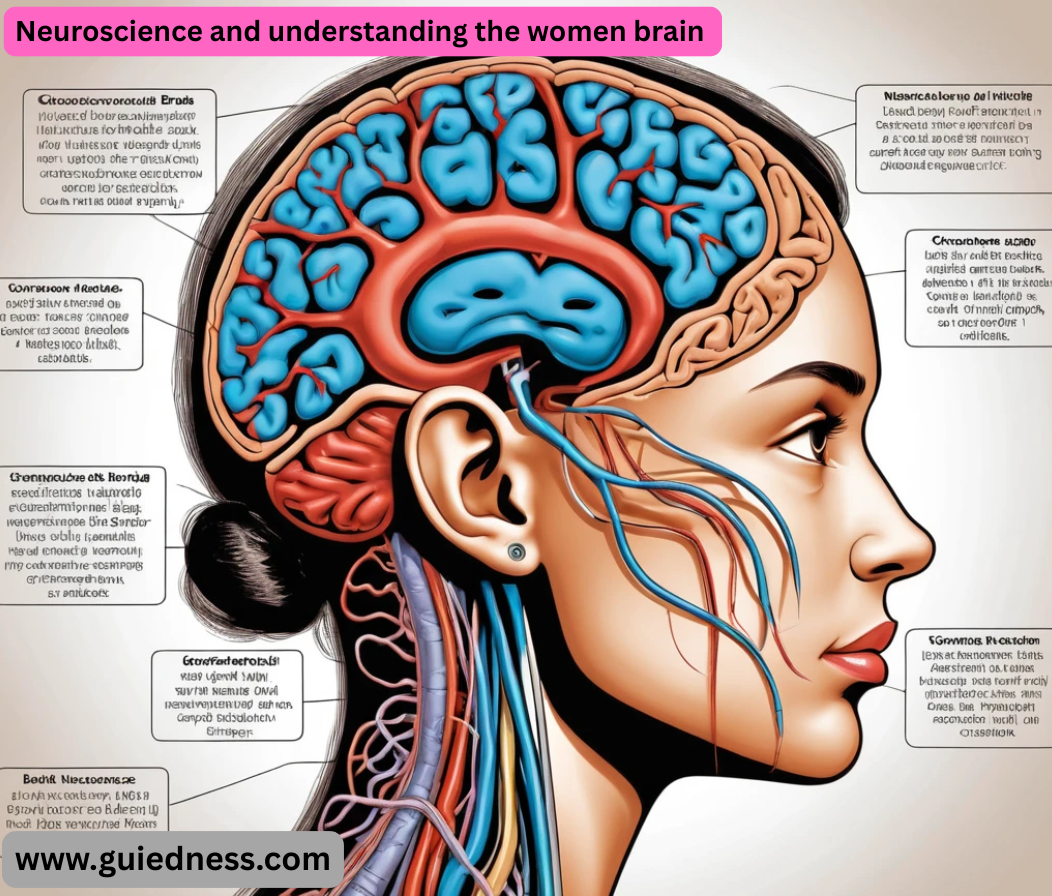
Neuroscience and understanding the women brain Of course. This is a fascinating and complex topic that sits at the intersection of neuroscience, psychology, and sociology. Let’s break down what neuroscience can and cannot tell us about understanding the “women’s brain,” addressing both the scientific findings and the critical caveats.
The Key Principle: Overlap vs. Difference
- The most important concept in this discussion is that the differences between individual brains of any gender are far greater than the average differences between the genders. Neuroscientist Daphna Joel calls this the “mosaic” of the brain—each person has a unique mix of features, some more common in males, some more common in females, and many common in both.
- With that crucial understanding in mind, let’s explore the areas where neuroscience has observed average differences.
Structural and Functional Differences (On Average)
- Research using MRI and other brain imaging techniques has shown some statistical trends when comparing large groups of men and women. These are average differences and do not apply to any individual.
- Size and Volume: Male brains are, on average, about 10% larger in volume than female brains, even after accounting for body size. However, size does not equate to intelligence. There is no correlation between brain size and IQ within a species.
Connectivity: Some studies suggest differences in neural wiring.
- Neuroscience and understanding the women brain Within-Hemisphere vs. Between-Hemisphere: One popular (though debated) theory suggests that male brains, on average, show more connectivity within each hemisphere, potentially favoring localized processing (e.g., perception and coordinated action). Female brains, on average, may show more connectivity between the hemispheres, potentially favoring integration of analytical (left hemisphere) and intuitive (right hemisphere) information.
- The “Gist” vs. “Details”: Some research indicates that women may, on average, activate more areas of the brain related to both language and emotional memory when recalling emotional events, potentially remembering more sensory details. Men might, on average, recall the broader “gist” of the event.
Brain Regions: Certain structures show average size differences:
- Hippocampus: Often larger in women. This is key for memory formation and emotional memory.
- Amygdala: Often larger in men. This is a central hub for processing emotions like fear and aggression.
- Prefrontal Cortex: Some studies show it matures slightly earlier in women and may be engaged differently in decision-making scenarios involving risk and reward.
- Chemical Neurotransmitters: Men and women can metabolize neurotransmitters like serotonin, dopamine, and oxytocin at different rates, which can influence responses to stress, reward, and social bonding. For example, the female brain may utilize serotonin differently, which is a factor in the higher rates of depression and anxiety disorders in women.
The Role of Hormones
- This is a massive factor. It’s not that men and women have completely different “brain operating systems”; it’s that the same hardware is often running on different hormonal “software.”
- Estrogen and Progesterone: These hormones fluctuate throughout the menstrual cycle and have profound effects on the brain. They influence:
- Neuroplasticity: The brain’s ability to rewire itself. Some studies show learning and memory can be enhanced at certain points in the cycle.
- Emotional Sensitivity: Sensitivity to social cues and emotional stimuli can vary with hormone levels.
- Stress Response: The female stress response, involving the HPA axis (Hypothalamic-Pituitary-Adrenal axis), is influenced by estrogen and can be more
sensitized than the male response.
- Oxytocin: Often called the “bonding hormone,” it’s important for both sexes but plays a distinct role in female social behavior, childbirth, and breastfeeding. It promotes nurturing, trust, and social connection. (In men, testosterone moderates its effects, often linking it more to pair-bonding after a competitive act).
What Neuroscience CANNOT Do
This is just as important as the findings.
- It Cannot Prove “Essentialism”: Neuroscience cannot say that any behavioral difference is “hardwired” or immutable. The brain is profoundly plastic—it changes based on experience, learning, and culture.
- It Cannot Separate Nature from Nurture: From the moment of birth (and even in the womb), boys and girls are often treated differently. Their brains develop in response to this different social input. A structural difference seen in an adult brain could be the cause of a behavioral difference or the result of a lifetime of different experiences and expectations (a concept called neurosexism).
- It Should Not Be Used to Stereotype: Applying group averages to an individual is bad science and can be harmful. Knowing that women, on average, might have a larger hippocampus tells you nothing about the memory capacity of the specific woman you are talking to.

A More Useful Framework: Understanding Female-Specific Experiences
- Instead of searching for innate, fixed differences, a more productive approach is to use neuroscience to understand experiences that are unique or more common to women:
- PMDD and PMS: Neuroscience is uncovering how a subset of women have brains highly sensitive to hormonal fluctuations, leading to severe premenstrual dysphoric disorder (PMDD). This is a real biological condition, not a “mood swing.”
- Postpartum Depression and Anxiety: The massive hormonal shifts after childbirth, combined with sleep deprivation and new stressors, can dramatically
affect brain chemistry and function in vulnerable individuals.
- Neuroscience and understanding the women brain Menopause and the Brain: The decline of estrogen during perimenopause and menopause can affect memory, sleep, and mood, as the brain has many estrogen receptors.
- The Female Stress Response: Understanding the “tend-and-befriend” response (a theory proposed by Dr. Shelley Taylor) as opposed to just “fight-or-flight.” This suggests that under stress, women may be neurobiologically primed to protect their offspring (tend) and seek social support (befriend).
Conclusion: A Mind of Its Own, Not a “Female Brain”
- Neuroscience is moving away from a binary view of “male vs. female brains.” A better way to think about it is:
- The brain is a unique, individual organ shaped by a complex interplay of genetics, hormones, life experiences, and cultural expectations.
. The Critical Lens: Neurosexism and the Danger of Dichotomy
- . Neurosexism is the bias that fuels the tendency to label differences as “hardwired” and then use them to justify social gender roles.
- The Circular Argument Problem: For decades, scientists found a brain difference and immediately attributed it to innate biology, ignoring culture. Example: “The larger hippocampus in women explains why they are more emotional.” But what if the act of being socialized to be more emotionally Attentive and verbal about feelings throughout a lifetime actually grows the hippocampus? The brain difference could be the result, not the cause.
- The Mosaic Brain: The work of neuroscientist Daphna Joel and her team is pivotal. They analyzed MRI scans of over 1,400 brains, examining the regions
with the largest average gender differences. They found that:
- Neuroscience and understanding the women brain Publication Bias: Studies that find differences are more likely to be published than studies that find no differences, creating a skewed scientific literature.
- The Takeaway: Always view findings of “average difference” through this critical lens. The brain is not a static organ; it is a dynamic, self-organizing system shaped by a continuous feedback loop between biology and experience.
The Immune-Brain Connection: The Role of Microglia
- This is a frontier in neuroscience with huge implications for understanding gender disparities in brain disorders.
- What are Microglia? They are the primary immune cells of the brain. They act as scavengers, pruning unused neural connections (synapses) during
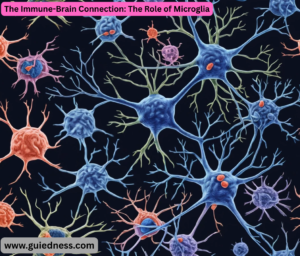
development and responding to injury and infection.
- The Estrogen Link: Estrogen has potent anti-inflammatory effects and can suppress microglial activation. Testosterone can also suppress inflammation, but its conversion to estrogen (aromatization) in the brain is part of this effect.
Implications:
- Neuroscience and understanding the women brain Development: The timing and degree of synaptic pruning by microglia, influenced by sex hormones, could subtly shape brain wiring differently in males and females.
- Brain Disorders: Many neurological and psychiatric disorders (e.g., Alzheimer’s, Multiple Sclerosis, Autism, Depression) have an inflammatory component. The differences in microglial function, regulated by sex hormones, may be a key reason for the starkly different rates of these disorders between men and women.
- Example: Women are significantly more likely to get Alzheimer’s disease, even after accounting for longer lifespans. The role of microglia and the dramatic drop in protective estrogen during menopause are major areas of investigation.